Yes, dogs can eat turkey, but only when it’s prepared the right way. Plain, boneless, unseasoned, cooked turkey meat is generally safe for most dogs in small amounts, while skin, bones, gravy, and heavily seasoned holiday turkey can lead to serious health problems. If you’re standing in the kitchen wondering whether to slip your dog a bite from the table, the short answer to “Can dogs eat turkey?” is yes, with important caveats about preparation and portion size.
Every November, our team at Harlingen Veterinary Clinic in Belle Mead fields the same question from worried pet owners: can dogs eat turkey, or is it safer to keep it off the menu entirely? The truth is that turkey itself is not inherently dangerous. It’s a lean, protein-rich meat that many commercial dog foods already include as a primary ingredient, which is one reason so many owners assume that dogs can eat turkey. The problems arise from how humans typically prepare turkey for their own meals, not from the meat itself.
Can Dogs Eat Turkey Safely? What Vets Recommend
Plain, fully cooked, boneless turkey breast is the safest way to answer the question of “Can dogs eat turkey?” without inviting trouble. A small piece of white meat, free of skin and seasoning, can be an occasional treat for most healthy adult dogs. The key is portion size and preparation, since even a food that’s generally considered safe can cause problems if it’s given in excess or paired with the wrong ingredients.
Choosing the Right Cut
White meat from the breast is leaner than dark meat from the thigh or leg, which makes it easier on your dog’s digestive system. Dark meat carries more fat, and rich, fatty foods are one of the most common triggers for canine pancreatitis. Sticking to small, plain portions of white meat is the more cautious choice when deciding whether your dog can eat turkey from that particular cut.
Portion Guidelines
When people ask, “Can dogs eat turkey in larger amounts?”, the answer is still no. A few bite-sized pieces mixed into your dog’s regular food is plenty for most dogs. Turkey should never replace a balanced diet or make up a large percentage of daily caloric intake. Treats and extras, including turkey, are generally recommended to stay under 10 percent of a dog’s total daily calories, which keeps the answer to whether dogs can eat turkey firmly in “occasional treat” territory rather than a dietary staple. Additional tips to keep in mind:
- A golden retriever-sized dog can typically handle a couple of small cubes of plain turkey as an occasional treat
- Smaller breeds should get proportionally smaller portions, closer to a single bite
- Dogs with a history of pancreatitis or digestive sensitivity should avoid turkey extras altogether unless a veterinarian says otherwise
The Real Dangers: Turkey Skin, Bones, and Seasonings
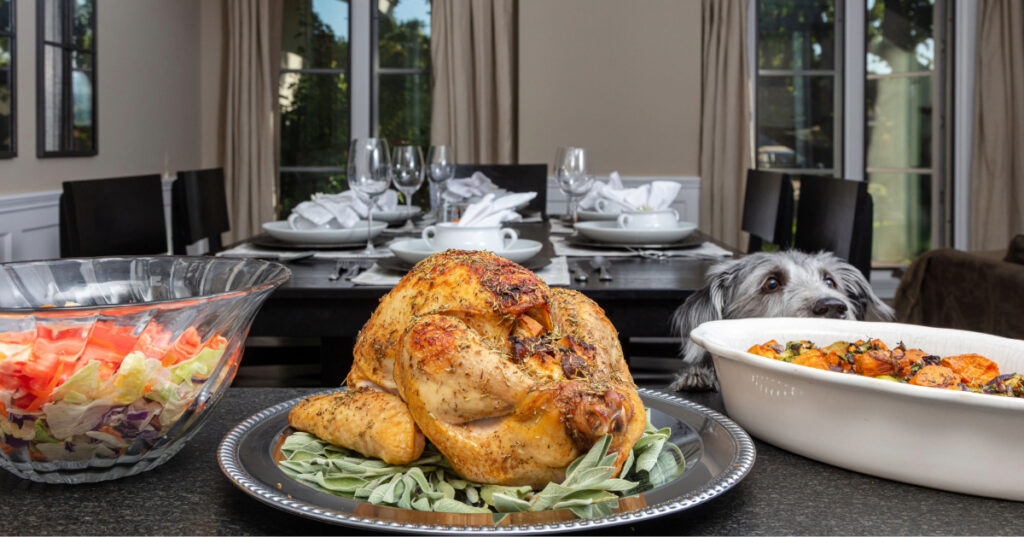
When people ask if dogs can eat turkey after a holiday meal, the concern usually isn’t the meat itself but everything that comes along with it. Turkey skin, gravy, stuffing, and cooked bones are where the real risks hide, and they’re often served right alongside the meat your dog is eyeing from under the table. So while dogs can eat turkey meat safely, the same cannot be said for these accompaniments.
Why Turkey Skin and Gravy Are Risky
Turkey skin is loaded with fat, and gravy typically contains butter, drippings, onion, or garlic. Onion and garlic, in any form, are toxic to dogs and can damage red blood cells over time. Fatty skin and gravy can also trigger vomiting, diarrhea, or pancreatitis, particularly in dogs that aren’t used to rich food. This is a major reason the question of “Can dogs eat turkey?” needs a more nuanced answer than a flat yes or no.
The Danger of Cooked Bones
Cooked turkey bones become brittle and can splinter easily, creating sharp fragments that pose a choking hazard or can puncture the digestive tract. Raw bones carry their own risks, including bacterial contamination and dental fractures. The safest approach is to keep all turkey bones, cooked or raw, completely away from your dog and dispose of carcasses where pets can’t reach them. Here’s some tips for keeping your pet safe:
- If you’re hosting, take the carcass outside to an exterior bin right after cleanup instead of leaving it in the kitchen trash
- Warn holiday guests, especially children, not to feed table scraps or bones to the dog
- Freeze leftover turkey you plan to keep, since freezer storage removes the temptation of an easily accessible countertop plate
Signs of Trouble After Your Dog Eats Turkey
Even careful owners sometimes discover their dog got into more turkey than intended when no one was watching, which raises the “Can dogs eat turkey?” question again under less controlled circumstances. Knowing the warning signs helps you decide how quickly to seek veterinary attention if things go wrong after your dog eats turkey products they shouldn’t have, even if you were confident that dogs can eat turkey in general.
Digestive Upset
Vomiting, diarrhea, loss of appetite, and lethargy are the most common signs of digestive upset following a rich or fatty meal. These symptoms often appear within a few hours to a day after ingestion and can range from mild to severe depending on how much was eaten and the dog’s individual sensitivity. This is another reason the answer to whether dogs can eat turkey depends heavily on what else was on the plate.
Signs That Need Immediate Attention
Pancreatitis can present as a hunched posture, abdominal pain, repeated vomiting, and a noticeably tender belly. A dog that swallowed bone fragments may show signs of choking, gagging, drooling, or straining and discomfort when trying to pass stool. Any of these symptoms warrant a prompt call to your veterinarian rather than a wait-and-see approach:
- A sudden loss of interest in food that lasts beyond a single meal
- A belly that feels tense, bloated, or unusually firm to the touch
- Unusual quietness or reluctance to engage in normal play, even hours after the meal
Bringing Turkey Into Your Dog’s Regular Routine
The question of whether dogs can eat turkey doesn’t have to be an all-or-nothing decision reserved for holidays. Plain turkey, prepared correctly, can be a useful addition to a dog’s diet in moderation, and some owners choose to include it more regularly rather than as a once-a-year treat.
Using Turkey as a Training Treat
Small, dry pieces of plain turkey work well as a high-value training treat because most dogs find the smell and taste appealing. Cutting the meat into small, low-calorie pieces keeps portions in check while still giving your dog something to work for during training sessions. It’s a practical, everyday answer to “Can dogs eat turkey?” that goes beyond the holiday table.
Talking to Your Veterinarian First
Dogs with existing health conditions, food sensitivities, or a history of pancreatitis should only receive turkey with your veterinarian’s guidance. Our team at Harlingen Veterinary Clinic can help you determine whether turkey is a good fit for your individual dog based on their weight, health history, and any dietary restrictions already in place. If you’re still unsure whether your dog can eat turkey given their specific medical history, a quick conversation with your vet is the best next step before the holidays arrive. Call (908) 359-2000 or book an appointment online today!
Turkey doesn’t have to be a source of holiday stress once you know what to watch for. Plain, boneless, unseasoned turkey in small amounts is a reasonable treat for most healthy dogs, while skin, gravy, seasoning, and bones belong nowhere near your pet’s bowl. Paying attention to preparation and portion size lets your dog enjoy a taste of the occasion without the trip to the emergency clinic. When in doubt about whether your dog can eat turkey given a specific ingredient or their individual health needs, a quick call to Harlingen Veterinary Clinic is always the safer route.