
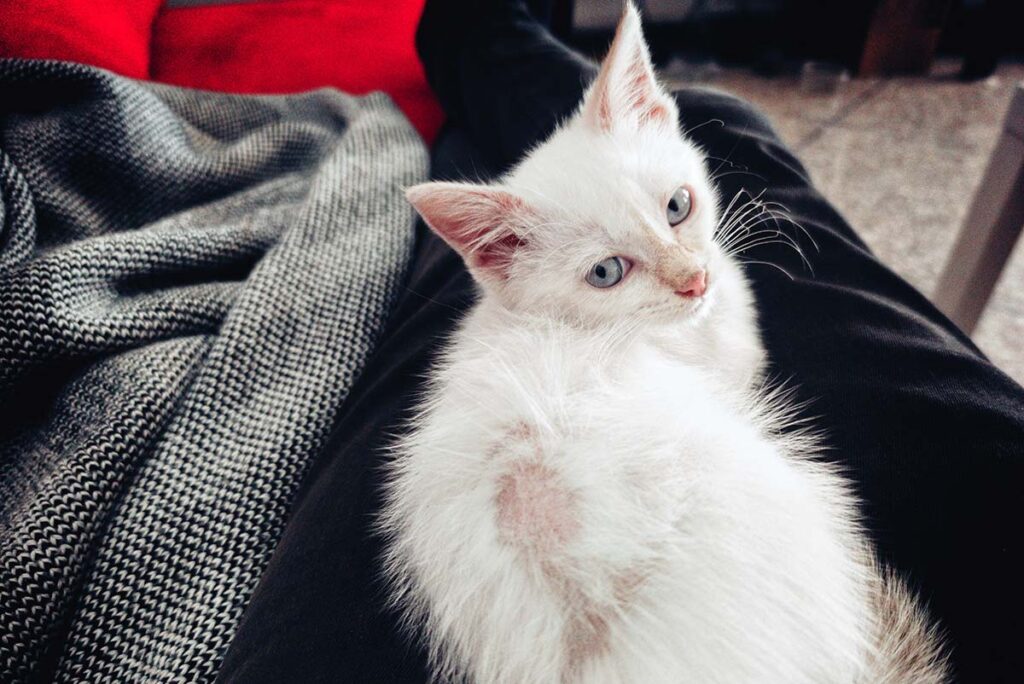
A cat losing hair is often responding to changes in skin health, grooming behavior, or internal balance. While normal shedding occurs year-round, a cat losing hair in patches, thinning sections, or uneven patterns usually reflects an underlying concern. Pet owners often notice their cat losing hair before any other symptom appears, which makes coat changes an important early signal. Because a cat losing hair can involve medical, behavioral, or environmental factors, professional evaluation helps clarify the cause. When a cat loses hair and shows persistent or worsening changes, veterinary guidance becomes essential.
If your cat losing hair has raised concerns, the team at Harlingen Veterinary Clinic in Belle Mead, NJ, is here to help. Call (908) 359-2000 for an appointment or more information.
What is Alopecia in Cats?
Alopecia is the clinical term used when a cat losing hair develops partial or complete hair loss. A cat losing hair from alopecia may show bald patches, thinning fur, or uneven coat texture. These changes may appear symmetrical or irregular, depending on the cause. Alopecia itself is not a diagnosis but a visible result of something affecting the skin, hair follicles, or grooming behavior.
When a cat loses hair and presents with alopecia, veterinarians evaluate whether the cause involves inflammation, infection, hormones, parasites, or stress. Some cats losing hair groom excessively due to irritation, which worsens hair loss. Others lose hair because follicles stop producing fur normally. Because a cat losing hair can look different in every case, alopecia always signals the need for further evaluation.
Common locations where a cat losing hair may show alopecia include:
- Belly and inner thighs
- Back and tail base
- Neck and face
- Sides of the body
Each pattern helps guide diagnostic direction.
Symptoms of Hair Loss in Cats
A cat losing hair often shows more than coat changes alone. Many cats losing hair also develop skin or behavioral changes. Some cats losing hair appear itchy, while others show no obvious discomfort. The progression may happen slowly or suddenly.
Signs commonly seen with a cat losing hair include:
- Patchy or thinning fur
- Excessive licking or grooming
- Flaky or thickened skin
- Redness or darkened areas
- Sensitivity when touched
A cat losing hair may also act withdrawn or restless. Some cats losing hair continue to behave normally, which makes the issue easy to miss. Even when symptoms appear mild, any cat losing hair should receive professional evaluation. Early assessment helps reduce the risk of chronic skin damage.
Causes of Hair Loss in Cats
A cat losing hair can experience coat loss for many different reasons. In some cases, several factors occur at the same time. This overlap makes veterinary diagnosis especially important.
Common causes of a cat losing hair include:
- Allergic skin responses
- Parasites affecting the coat
- Bacterial or fungal infections
- Hormonal imbalances
- Immune-related skin disease
- Behavioral overgrooming
A cat losing hair due to allergies often shows itching or redness. Parasite-related hair loss frequently affects the tail base and back. Hormonal causes usually produce symmetrical hair thinning. Infection-related hair loss may involve odor, discharge, or thickened skin.
Stress and Behavioral Grooming
Stress plays a significant role in many cases of a cat losing hair. When stress triggers overgrooming, a cat losing hair often develops smooth bald patches with otherwise healthy skin. Changes in routine, environment, or social dynamics can cause this pattern. Over time, constant grooming prevents hair regrowth.
Because stress is not always obvious, a cat losing hair from behavioral causes often surprises pet owners. Veterinary evaluation helps distinguish behavioral grooming from medical skin disease.
How Veterinarians Diagnose Alopecia in Cats
When a cat losing hair visits the clinic, veterinarians begin with a detailed history. Pet owners describe when they noticed the cat losing hair, how fast it progressed, and whether behavior changed. This information helps narrow possible causes.
A physical exam allows veterinarians to evaluate skin texture, coat pattern, and overall health. For a cat losing hair, diagnostic tools may include skin testing, coat analysis, or laboratory screening. These steps help identify infections, parasites, or internal contributors.
A cat losing hair often requires multiple diagnostic steps because no single test explains every case. Each result builds a clearer picture and guides appropriate planning.
Treatment of Hair Loss in Cats
Treatment focuses on the reason a cat losing hair developed alopecia. Because a cat losing hair can have many possible causes, treatment plans always differ. Veterinarians create individualized strategies based on diagnostic findings.
Some cats losing hair require care aimed at inflammation control. Others need support for skin healing, hormonal balance, or immune regulation. A cat losing hair from infection follows a different plan than a cat losing hair from behavioral grooming. Individualized care improves long-term coat recovery.
Why Individual Treatment Matters
No two cats experience the same condition in the same way. Even when symptoms appear similar, underlying causes may differ. Individual treatment ensures the cat losing hair receives care that matches its specific needs, improving comfort and reducing recurrence.
Recovery and Management of Hair Loss in Cats
Recovery depends on the cause and how early the cat losing hair receives care. Some cats losing hair show improvement within weeks, while others require long-term management. Hair regrowth usually begins as fine new fur before full thickness returns.
Ongoing management helps prevent repeated episodes of a cat losing hair. Regular veterinary monitoring supports healthy skin and coat quality. Environmental and routine adjustments may also support recovery when guided by professional evaluation.
Pet owners should expect gradual improvement. A cat losing hair rarely regains a full coat overnight. Consistency and follow-up care support the best outcomes.
Prevention of Hair Loss in Cats
Not every case of a cat losing hair can be prevented, but proactive care lowers risk. Routine veterinary visits help detect early skin and coat changes. Early evaluation shortens recovery time and reduces complications.
Prevention often focuses on:
- Regular health monitoring
- Skin and coat assessments
- Stress awareness
- Parasite control
- Consistent nutrition
When a cat losing hair receives early attention, long-term comfort improves.
When to Call the Veterinarian
If you notice your cat losing hair in patches, thinning areas, or with skin changes, professional evaluation is recommended. Even mild coat changes can reflect deeper concerns. Early care helps protect your cat’s skin, coat, and overall well-being.
Supporting Your Cat’s Coat Health
A cat losing hair reflects more than appearance. It often signals changes in skin health, comfort, or behavior. With proper evaluation and management, many cats losing hair regain healthy coats and improved quality of life. If your cat’s loss of hair has raised concerns, call Harlingen Veterinary Clinic in Belle Mead, NJ, at (908) 359-2000 to schedule an appointment or learn more. Professional guidance helps your cat regain comfort and coat confidence.